Tuesday, 22 December 2015

Exhibitions and Engagement

An exhibition, in the broad sense, is an arranged presentation and display of a selection of items, examples of exhibitions would be galleries and museums. However, with the spread of smartphones which can often distract some people when they’re not engaged with their surroundings, weather it is because nothing grabs their attention or mere personal disinterest.
There are several factors that can get interested people into going to exhibitions:

Interactivity
When someone obverses a work passively, their brain is generally less active and doesn’t take in much information but when they are interacting with a work, their brain is more active and takes in much more information.
            Interactivity varies between different forms of media; music has you listen to a song (which can be done actively or passively by whether you decide to pay attention to the aspects of like lyrics or the rhythm). Books require you to make an effort to read it so that your brain is at least moderately active. Films, depending on the genre, require varying degrees of passive and active viewing; for example, a superhero movie requires you to be passive in regards to suspending their disbelief in order to enjoy the film, but a documentary would need you to watch the film actively to absorb the information presented in it.
            Video games have the highest level of interactivity among all forms of media as you interact directly with the world and characters within the game. As with films, the level of interaction differs depending the genre, in Roleplaying Games (such as The Elder Scrolls series) it can as deep as creating your character’s physical appearance and choosing what they say to other characters, or in a game like The Stanley Parable it can be as simple as walking and occasionally pressing a button.


Accessibility
There are two types of accessibility; physical accessibility and knowledge accessibility. Physical accessibility means people are more likely to attend an event, such as exhibitions, if it is at a convenient location and they have practical means to get there. However this can be bypassed if the event organisers provide other methods for people to experience it, for example, livestreaming the event online.
            Knowledge accessibility is based around a person’s existing knowledge of a work and whether they need to know a bit of information about work or the creator, for example, a gallery advertises a special exhibit about Van Gogh, someone who knows about Van Gogh and his work might be interested in going to the event, where as someone who doesn’t know about Van Gogh may be less interested in going. A way to negate this is by providing information about works, their creators and, in some cases, their historic context not just in the exhibits themselves but also on any advertising for said exhibits.

Relevance
Relevance can affect a work’s appeal to the public or to specific people. A work’s importance can vary depending on the state of the our world, for example, Martin Luther King’s “I Have a Dream” speech still has relevant today as there is still a serious racism in the modern world.

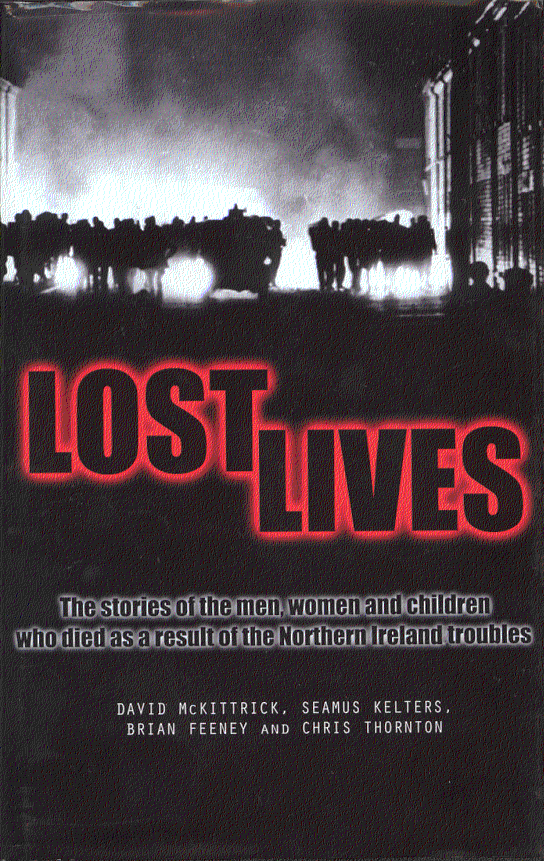
More recent examples would be the many works based on the Troubles in Northern Ireland, ranging from books, films and TV series as the Troubles had an extremely large on people’s lives and its legacy is still felt today.


Video Games – A New Form of Exhibitions
Video games can be used a new platform of exhibitions, as mentioned above, they have a high interactivity which means the person playing them will take in more of the information presented to them. Exhibits can be converted into video game forms in interesting ways. A museum is a collection of items of artistic, cultural, historical, or scientific significance; the intention of exhibiting these items is to educate the viewer about them. In the media of video games, the viewers can be taught in a more creative way by recreating the environments related to certain items, for example, instead of someone looking at Stone Age tools in a display case, a person can explore a virtually recreated Stone Age village in a game, seeing how historians believe people lived back then, the person playing would be able to would be watch villagers use tools and interact with them on some level. This can applied to different time periods and at different parts of the world.
            Examples of these types of games already exist, mostly in the form of educational games such as The Oregon Trail which is based the historical event of the same name.

However, games that don’t come under the category of being educational can still encourage people to learn about historical, cultural, political and other subjects through tangential learning:

Big Data - The New Age

Data can take many forms from basic personal information to what websites you visit and how often you visit them. In today’s world where practically all technology is connected to vast networks of information, we are contributing data about ourselves to these networks without even knowing it. However, whether that data accurately reflects who we are and how we behave varies for everyone, some of us may act more conservatively online but others may go online and look at random sites that don’t really reflect who they are.

New Oil
With the internet now widespread, companies have taken to advertise their products online and to this the companies will websites show they adverts. Many websites’ main source of revenue comes from advertisers; Facebook would an example of this kind of website. Facebook is free to join and use, so it has to get its money from advertisers, not only by merely allowing ads on the website but also selling users’ personal data which lets advertisers target their ads at people who are more likely to buy their products, based on personal information.

Facebook has also been known to manipulate its own data make itself more appealing to advertisers:

Dangers of Data
While data may not fully represent a person, there is a way information about people can be weaponised. An example would be China’s planned "social credit" system which measures a citizen's compliance with the state. The system involves compiling data about a citizen such as what they buy or what they post on social media and then uses that information to calculate a “ranking” for that citizen:

Data and Humanity
We are in a new age, the Data Age, where wearable technologies like Fitbit keep a log of how many steps a wearer takes. More and more people are having most of their lives catalogued, stored and shared. In the Data Age, humanity has become more connected than ever, both to each other and to technology itself. This connectivity is enabling better exchange of knowledge which results in ever increasing progress. Society can even be compared to that of a hive mind:

The Power of Sound

When many people think of art, they usually think of visual works such as paintings but visuals aren't the only way to create and express art as there is also sound. When people associate sound and with art, it’s often when they're talking about music though one can debate what qualify as music. Would the sound of nocturnal animals in a natural environment could as music? Some people may say it does while others may say it doesn't; it entirely is subjective like any form of art.

Conveying Emotion
Sound can convey emotion to an audience through its tone, rhythm and vocals; though having vocals doesn't mean there will have coherent lyrics. Examples of emotions that can be expressed through music include:

Upbeat Goofiness


Adventure


Conflict


Impending Dread


Terror

Sound Complimenting Imagery

Sound plays an important role even when coupled with imagery. While an image can express emotion on its own, sound can be used to help convey the emotion of the image. Or in some cases, sound can be used to create a juxtaposition (when two or more things contract each other) between it and the image:


Tuesday, 8 December 2015

Understanding the Virtual Space

Our Many Identities
In today’s society we live in two worlds: the physical world and the virtual world. The physical world is where we live our primary life; the virtual world is where we live our secondary lives. In both worlds we often filter ourselves for fear of ridicule from our peers and/or society, for example, when someone posts a statement on a social media site like Facebook, that person edits and rewrites the statement before posting it so that anyone who reads it will react to it in a way that the poster intended.


Unlike in the real world, it is easier for people to create a more idolized of themselves in the virtual space, the reasons some people do this can vary from peer pressure to simple narcissism. People can create profiles that they can use to express a side of themselves that their publicly afraid to show.

Escapism
In our modern world where every day seems to bring bad news, some people may even have their own personal problems to deal with which leads to stress that take a heavy toll on a person’s mental, emotional and even physical state, thus some person look for means of “escape” through mediums such as the internet. As mentioned above, the virtual space is essentially a place for people to go to when they need to get away from the real world. Escape can also be done through other mediums such as books, films and video games.


Criticism in the Virtual Space
While in the virtual space, some people may come under criticism especially if they’re a content creator. Types of criticism can range from helpful constructive criticism to simple expression of dislike because of personal preference to ill-willed insults. That last form of criticism is often known as “trolling”; when somebody causes discord for their own amusement. Insults can sometimes turn into genuine harassment, which is why some people try to shield themselves from criticism altogether. An example of this would be a YouTube content creator disabling the ability to rate and comment on their videos. This can lead to people developing a superiority complex and perceiving any criticism as an attack.

Friday, 30 October 2015

Ways to Read a Work

There are three ways to examine a work:
·         Narrative Interpretation
·         Technical Analysis
·         Context of Creation

Narrative Interpretation
Narrative interpretation is studying the narrative elements within a work such as themes, metaphors or ideas the author wanted to express through their work. Every person can interpret a work differently, for example, someone can say that the play Romeo and Juliet is about the foolishness of young lovers but another person can say it’s is actually about the thoughtlessness of the old generation, technically neither is wrong, it’s up to personal interpretation.

Interpretation can lead to the discovery of things like hidden symbolism. For example, some people believe that the film Inception is actually metaphor for filmmaking; each character in the main cast represents different members of a film crew:

However, narrative interpretation can sometimes lead people to find meaning in things the author did not intend to have; an example would when some people interpreted that the ring from The Lord of the Rings series was an allegory for the nuclear bomb during World War 2, J.R.R. Tolkien however denied this:

Technical Analysis
Technical analysis is about observing the technics used to create a work, this can range from practical effects used in films to the craftsmanship of a pot.


These techniques aren't limited to visual imagery; they can also be seen in written works. For example, an author can express a character’s personality through their dialogue such as having a character talking for a whole paragraph about various trivia topics to show that the character is chatty and absent-minded without directly stated it to the audience.

Certain technics can be seen as the creator’s signature, for example, Stanley Kubrick’s films feature one-point perspective shots. Kubrick would use this technique to draw attention a subject positioned at the vanishing point.


Context of Creation
Context of creation revolves around looking into a work’s origin: who made it, why was it made, when and where it was make, etc. Understanding these area would shed new light on certain aspects of a work, for example in India there is a taboo against public kissing hence why there are lots of “kissing discretion shot” in Bollywood movies.
A more detailed example would be Derek Jarman’s 1993 film Blue which is made up of a single shot of the colour blue filling the screen with narration. The film was released four months before his AIDS-related death; complications from the disease had already rendered him partially blind at the time of the film's release. Before making the film, Jarman wrote a book called Chroma which was about what different colours meant to him, this in turn severed as the bases for the film.


Friday, 23 October 2015

What is Creativity?

Obviously, it takes imagination to create something new but would that new thing even be original? There are over seven billion people currently living on earth, each person with a mind full hundreds or even thousands of ideas, then there are all the people who have lived or will live and the ideas they had or will have. Does being truly creativity mean you have to be 100% original? Short answer: No.
Creativity is, in my opinion, the ability not only to creative but to “play with” what already exists. For example, take the simple story of a knight in shining armour setting out to rescue a princess from a tower guarded by a dragon; there are many ways to retell this in new and interesting ways, such as having the knight be a depressed death seeker more in dying in the fight against the dragon rather than saving the princess.

To illustrate this, “tropes” (concepts within storytelling) are often “played with”:

Using a basic archetype to use as a foundation to build upon using different ideas is very common in works today, mostly all books, films and games have the same narrative structure. However there are some other works will deviate from this norm.
This also applies to genre, an example of a work that experiments with a certain genre would be the video game Spec Ops: The Line (2012) which “deconstructs” (explores the to show various logical and moral problems) the war game genre by presenting issues real life soldiers face like PTSD. This demonstrates creativity on game developers who could have played it straight and make a standard military shooter that may have not been noteworthy but instead made a thought-provoking deconstruction.

Creativity Decay
"I am afraid to say that the history of entertainment is also the history of imitation."
Satoru Iwata, late CEO of Nintendo

While the method of building off an archetype can lead to the creation of unique and interesting works, it can also lead to what I can “creativity decay”. Creativity decay is when a creator of a work copies elements from another successful work in the hopes of making their own work popular, this also known as “Follow the Leader” mentality.
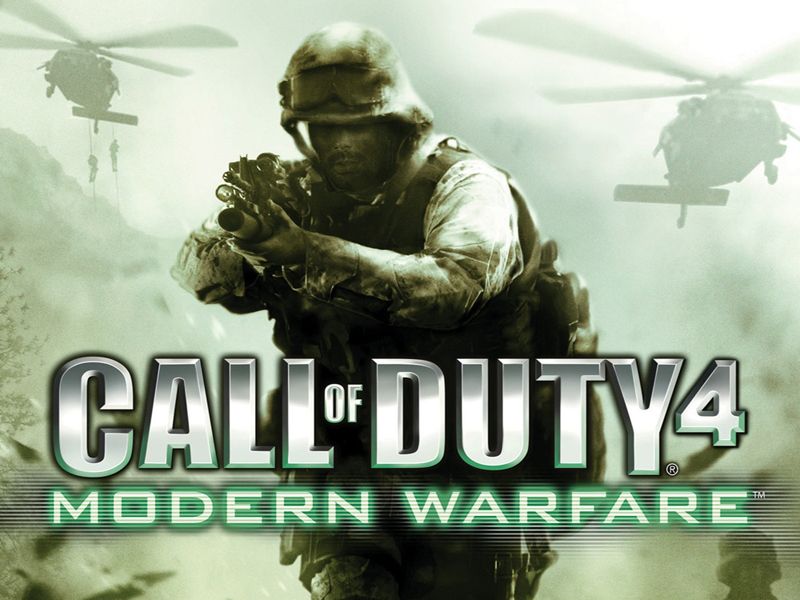
An example of this would in the games industry after the release of Call of Duty 4: Modern Warfare in 2007 to which it received critical acclaim and financial success, games released following this featured element found in Modern Warfare such as regenerating health, a two-weapon carry limit etc. The creativity decay worsened after the release of Call of Duty: Modern Warfare 2 in 2009, the game made over 1 billion dollars in sales which lead to more games being made to be like Call of Duty, even games that weren’t “shooters” were now being made to have more action-focused gameplay with the notion that will attract the audience who buy Call of Duty. This attitude was not helped by developers relying on focus testing: